
Chimney Liner Repair in Chatham, NJ: What It Actually Costs and What the Job Involves
Most Chatham homeowners don’t think about their chimney liner until a technician inserts a camera into the flue and reveals something they’d rather not see. A cracked terracotta flue tile, liner joints pulling apart, or years of spalling hidden inside the chimney aren’t cosmetic issues they’re serious safety concerns.
A compromised liner allows combustion gases, including carbon monoxide, to migrate through the masonry and potentially enter your living space. It also serves as one of the primary barriers that helps contain a chimney fire and prevents it from spreading to the surrounding structure.
Both the Chimney Safety Institute of America (CSIA) and NFPA 211 require chimney liners to be continuous, structurally sound, and properly sized for the appliance they serve.
Many older homes throughout Chatham, Madison, and Summit still rely on clay tile liners that have been in service for 40, 50, or even 60 years. Like any building material, those liners eventually wear out.
Here’s what chimney liner repair typically costs, what affects the price, and what you should expect throughout the repair process.
A Realistic Price Range
Chimney liner repair in Chatham, NJ generally ranges from $900 to $6,500, depending on the condition of the chimney and the scope of the work.
For a complete stainless steel liner replacement, most homeowners can expect to pay between $2,500 and $5,500, depending on the chimney’s height, configuration, and accessibility.
Minor repairs involving only a few damaged clay flue tiles such as two or three cracked sections near the firebox often fall between $900 and $2,000.
At the higher end, a two-story Colonial with a 25-foot chimney serving both a wood-burning fireplace and a separate furnace flue will naturally cost more than a single-story ranch with one straight flue.
These figures reflect realistic pricing throughout Morris County. If a contractor quotes substantially less for a complete chimney relining project, it’s worth taking a closer look at exactly what materials and installation methods are included.
What Drives the Cost Up or Down
Liner Length and Chimney Height
This is usually the largest pricing factor.
A taller chimney requires more liner material and additional labor. Many homes in Chatham’s older neighborhoods feature two-and-a-half-story structures with chimneys extending well above the roofline, increasing installation time and often requiring additional safety equipment.
Repair vs. Full Replacement
Not every damaged liner requires complete replacement.
If a Level 2 camera inspection reveals only isolated cracks or a short section of deteriorated clay tile, spot repairs using a brushed or poured refractory system may be sufficient.
However, replacing the entire liner with stainless steel eliminates the uncertainty of continuing to rely on aging clay tile.
Liner Type
Flexible stainless-steel liners are the most common option for wood-burning fireplaces because they’re durable, code-compliant, and recommended by the CSIA.
Rigid stainless-steel liners typically cost slightly more but work well in straight chimney systems.
Cast-in-place liner systems, which involve pouring a refractory material around an internal form, generally fall at the higher end of the price range. They create a seamless liner and are particularly effective for older chimneys with irregular flue shapes, which are common in some of Chatham’s pre-war homes.
Flue Configuration
Straight chimneys are simpler and less expensive to reline.
Offsets, bends, and multiple appliances sharing the same chimney chase require additional labor and specialized installation techniques.
Condition of the Surrounding Chimney
If your chimney also needs a smoke chamber parge, chimney crown repair, or firebox restoration, those services are typically priced separately.
A liner repair addresses the liner itself it doesn’t automatically include repairs to other chimney components.
Roof Access and Pitch
Steeper roofs require additional setup, fall protection, and labor.
Many homes throughout Chatham’s hillside neighborhoods require more extensive safety measures, which are reflected in the overall project cost.
What’s Included vs. What’s an Add-On
| Typically Included | Usually an Additional Charge |
|---|---|
| Level 2 video inspection before work begins | Chimney sweeping (if not bundled) |
| Removal of damaged liner or clay flue tiles | Chimney crown repair or rebuilding |
| Installation of the new liner with insulation | Smoke chamber parging |
| Top plate and appliance connector fittings | Firebox repairs |
| Final inspection and photo or video documentation | Chase cover replacement |
Some companies include chimney sweeping as part of a liner installation package, while others charge separately.
Always ask what’s included before approving the estimate.
NFPA 211 recommends a Level 2 inspection whenever repairs are performed on the chimney system. If a contractor offers to install a new liner without first inspecting the chimney with a camera, consider that a warning sign.
What the Installation Process Actually Looks Like
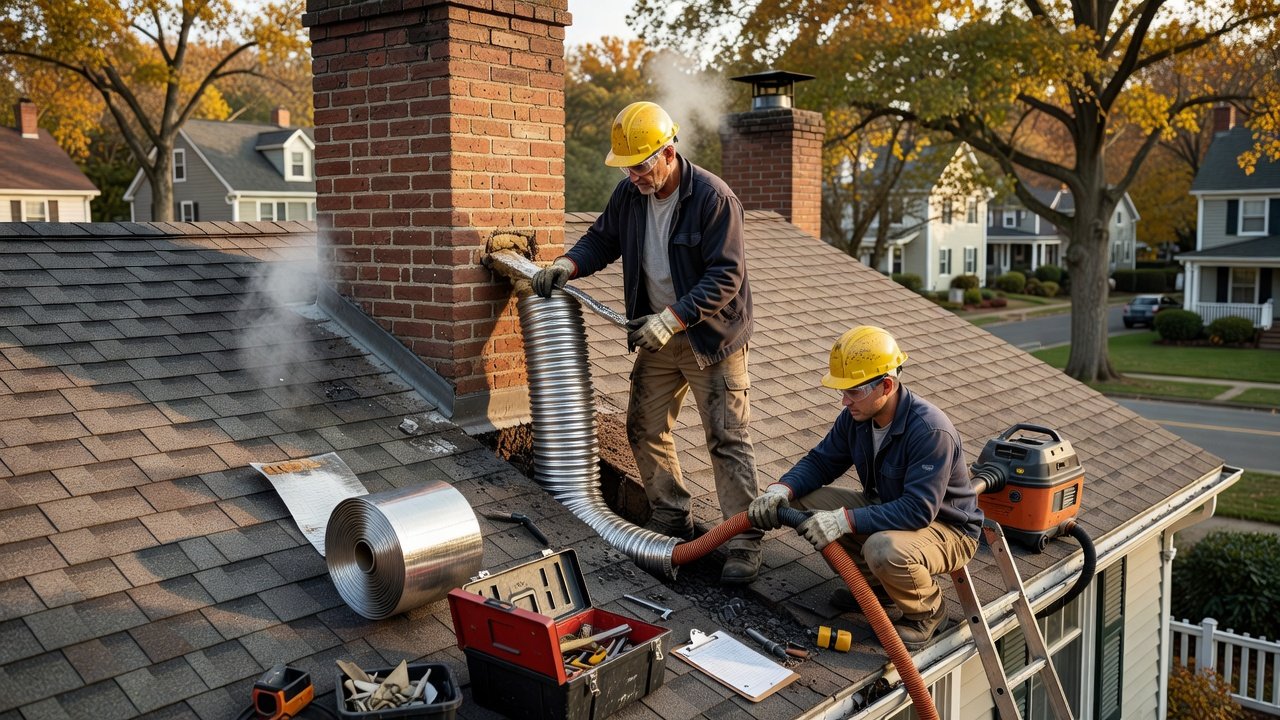
A standard stainless steel chimney liner installation in a Chatham home typically takes four to six hours for a single-flue chimney.
The technician begins by measuring the flue to verify its dimensions and determine the correct liner diameter.
Proper sizing is essential. A liner that’s too small restricts draft, while one that’s too large can increase condensation and reduce combustion efficiency.
For wood-burning systems, the liner is wrapped with an insulation blanket before installation, as recommended by CSIA guidelines.
The liner is then lowered or pulled through the chimney while another technician guides it from the fireplace opening.
After installation, the top plate is secured to the chimney crown, the bottom connector is attached, and all necessary joints are properly sealed.
Finally, a camera inspection confirms that the liner is fully seated, properly connected, and free from obstructions.
Spot repairs involving clay tile liners vary more widely depending on the location of the damage and the repair method being used. Some refractory repair systems also require curing time before the fireplace can safely be used again.
One Simple Way to Avoid Overpaying
Always ask to see the inspection report before approving any repairs.
A reputable chimney company serving Chatham should provide camera footage, explain the findings in clear language, and give you a written estimate detailing exactly what’s being installed.
The proposal should specify:
- Liner material
- Liner diameter
- Stainless steel grade
- Installation method
- Scope of work
A quote that simply says “chimney liner repair” without explaining the materials or installation process makes it nearly impossible to compare contractors accurately.
When estimates describe the same liner size, material, insulation, and installation method, comparing prices becomes much easier.
Schedule Your Free Chimney Inspection in Chatham, NJ
Chimney liner problems rarely become obvious right away.
By the time you notice deteriorating mortar inside the firebox or detect unusual odors in your home, the liner has often been deteriorating for months or even years.
We proudly serve homeowners throughout Chatham and surrounding Morris County communities, including Madison, Summit, and Florham Park.
Schedule your free chimney inspection today. We’ll inspect your chimney with a camera, explain exactly what we find, and provide a straightforward estimate for any repairs your chimney actually needs.
Our services
Chimney Services in Parsippany, NJ · Chimney Services in Hanover, NJ · Chimney Services in Chester Township, NJ · Chimney Services in Mountain Lakes, NJ · Chimney Services in Randolph, NJ · Chimney Services in Summit, NJ
Areas we serve
Chatham, NJ · Chatham, NJ · Chatham, NJ · Chatham, NJ · All areas →