
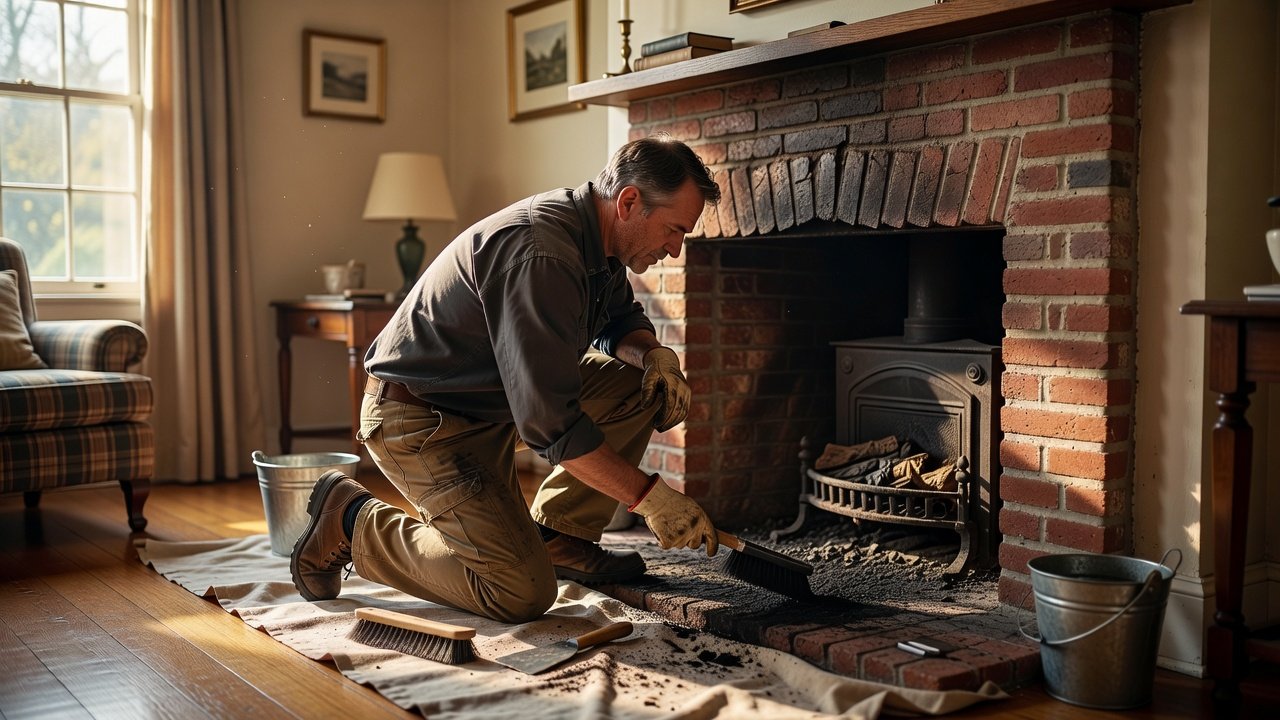
What Chatham Homeowners Get Wrong About Fireplace Cleaning
Fireplace cleaning removes soot, creosote, and debris from the firebox, smoke chamber, and chimney flue. A qualified chimney professional can also inspect accessible components for obstructions, deterioration, and signs of damage. The Chimney Safety Institute of America (CSIA) follows NFPA 211 guidance recommending that chimneys, fireplaces, and vents be inspected at least once a year, with cleaning, maintenance, and repairs performed as needed. That recommendation applies even when a fireplace is rarely used.
Many homeowners in Chatham, Madison, and Summit have used their fireplaces for years without experiencing a chimney fire. It can be tempting to assume that a system is safe simply because it still works. However, creosote buildup, hidden damage, and blockages can develop without obvious warning signs. Understanding a few common misconceptions can help homeowners make better decisions about fireplace maintenance.
Thinking a Rarely Used Fireplace Does Not Need Attention
A homeowner who burns only a few fires each year might assume the chimney stays clean because it gets so little use. But infrequent use does not eliminate every chimney hazard.
Birds and other animals can enter an uncapped or inadequately protected chimney. Nests, leaves, and other debris may obstruct the flue and interfere with proper venting. Moisture can also contribute to deterioration in masonry, mortar joints, chimney crowns, and other components, even when no fire is burning.
An annual inspection helps identify these issues before the fireplace is used again. The inspection may show that cleaning is necessary, or it may reveal a problem that needs repair first. The important distinction is that inspection is recommended annually, while cleaning depends on the chimney’s condition and the deposits present.
Assuming Inspection and Cleaning Are the Same Service
Inspection and cleaning serve different purposes, even though a professional may perform both during the same appointment.
Cleaning removes soot, creosote, and debris from the chimney system. Inspection evaluates the accessible parts of the fireplace and chimney for buildup, damage, obstructions, and other conditions that could affect safe operation.
NFPA 211 recognizes three levels of chimney inspection. A Level 1 inspection generally examines readily accessible portions of the system. A Level 2 inspection has a broader scope and may include video scanning of the flue interior. It is commonly appropriate when a home changes ownership, the connected appliance or fuel type changes, or a problem such as a chimney fire may have affected the system. A Level 3 inspection may involve accessing concealed areas by removing parts of the chimney or building structure when the suspected problem cannot otherwise be evaluated.
A routine cleaning should not be treated as proof that every part of the chimney is in good condition. Likewise, a visual inspection may not reveal the full condition of areas hidden by heavy deposits. Ask the chimney professional what inspection level is appropriate, what the service includes, and whether any limitations affect the findings.
Underestimating Creosote Buildup
Creosote is a combustible byproduct of burning wood. It can condense on the inside of a chimney when combustion gases cool. The amount and type of buildup depend on factors such as the wood’s moisture content, burning practices, appliance operation, and chimney conditions.
Some deposits are loose and flaky, while others are sticky, hardened, or glazed. Ordinary brushing may remove loose deposits effectively, but hardened or glazed creosote can require specialized methods and professional judgment. Chemical treatments may sometimes help prepare difficult deposits for removal, but they do not replace a proper inspection and mechanical cleaning when those services are needed.
Burning wet or unseasoned wood can contribute to creosote accumulation. Properly seasoned wood and good burning practices can help reduce buildup, but they do not eliminate the need for inspections.
Homeowners should not judge chimney safety solely by how much residue they can see from the fireplace opening. A qualified professional can assess the flue and determine whether deposits need to be removed.
Overlooking the Chimney Cap, Crown, and Flashing
A chimney cap helps keep rain, animals, and debris from entering the flue. However, having a cap does not guarantee that the chimney is protected from every source of moisture or damage.
The chimney crown, which covers the top of a masonry chimney around the flue, can develop cracks. Flashing where the chimney meets the roof can also deteriorate or develop gaps. A damaged cap, cracked crown, or failing flashing may allow water to enter the chimney system.
Moisture can contribute to staining, deteriorating mortar, damaged masonry, and other costly problems. During a service visit, ask whether the technician checks the accessible exterior components and reports any concerns. Repairs should be based on the actual condition of the chimney rather than assumptions about what needs replacing.
Choosing a Chimney Sweep Without Checking Credentials
Before hiring a chimney sweep, ask about the technician’s training, certifications, experience, and the exact services included in the appointment.
The Chimney Safety Institute of America offers CSIA Certified Chimney Sweep credentials. Certification can help homeowners identify professionals who have demonstrated knowledge of chimney and venting systems. Homeowners can also use the organization’s website to check a professional’s certification status.
Be cautious about relying on online reviews alone. Ask for a written description of the work, clarification about whether cleaning and inspection are both included, and documentation of any problems found. If repairs are recommended, request an explanation of the issue and why the proposed work is appropriate.
Do not assume that one certification covers every type of fireplace or appliance. For example, work involving gas appliances may require different training or qualifications than work involving a traditional wood-burning fireplace.
What Does Fireplace Cleaning Cost in Chatham?
The cost of fireplace cleaning in Chatham, NJ, depends on the chimney’s condition, the amount and type of buildup, the accessibility of the system, and the scope of the service. A straightforward cleaning is different from a job that requires specialized creosote removal, additional inspection work, or repairs to a damaged chimney component.
Before booking, ask for an estimate that clearly explains what is included. Confirm whether the quoted price covers a chimney inspection, cleaning of the flue and smoke chamber, and any additional services. If a technician identifies a cracked liner, damaged crown, or other defect, request a separate repair estimate where appropriate.
Avoid choosing a service based on price alone. A clear explanation of the work and written findings can help you compare quotes and understand whether the recommended service matches the condition of your fireplace.
Schedule Fireplace Cleaning Before You Need the Fireplace
Regular chimney maintenance helps homeowners identify buildup, blockages, and deterioration before these issues interfere with fireplace operation. An annual inspection is a useful starting point, even if the fireplace has seen little use. Cleaning and repairs should then be based on the findings.
If you need fireplace cleaning in Chatham, Madison, Summit, or New Providence, contact a qualified chimney professional to discuss your system and the services it needs. Ask what the appointment includes and whether any recommended repairs require a separate estimate. Scheduling before the heating season can give you more time to address problems before you plan to use the fireplace.
Related from Chimney in Chatham NJ: Chimney Sweep in Chatham, NJ
Our services
Chimney Services in Long Hill Township, NJ · Chimney Services in Parsippany, NJ · Chimney Services in Hanover, NJ · Chimney Services in Chester Township, NJ · Chimney Services in Mountain Lakes, NJ · Chimney Services in Randolph, NJ
Areas we serve
Chatham, NJ · Chatham, NJ · Chatham, NJ · Chatham, NJ · All areas →