
CSIA Certified Chimney Sweep in New Providence, NJ: What the Job Actually Looks Like
Hiring a CSIA-certified chimney sweep in New Providence, New Jersey, gives homeowners a way to verify that a technician has passed a nationally recognized certification exam. But what happens during the appointment, what does an inspection include, and how do you know whether your chimney needs cleaning or additional work?
This guide explains what certification means, what to expect during a chimney service visit, how inspection levels differ, and what to check before hiring a professional in New Providence and nearby communities.
What Does CSIA Certification Mean, and Why Does It Matter?
The Chimney Safety Institute of America (CSIA) offers the Certified Chimney Sweep credential to professionals who complete the required review and pass the certification exam. The credential must be renewed every three years through continuing education or testing.
The certification covers knowledge related to chimney and venting system evaluation and maintenance. It can help homeowners identify professionals who have demonstrated relevant technical knowledge.
However, certification is not a guarantee that every hidden defect will be found during every visit. The quality of the service also depends on the inspection scope, access to the system, the technician’s findings, and how clearly those findings are documented.
New Providence is in Union County, not Morris County. Homeowners in New Providence and nearby communities such as Summit, Madison, and Chatham should verify the technician’s active credentials and confirm that the company serves their address.
How Often Should You Schedule a Chimney Inspection or Cleaning?
Chimneys, fireplaces, and vents should be inspected at least once a year, following guidance from the National Fire Protection Association (NFPA) and CSIA. Cleaning, maintenance, and repairs should be performed when the system’s condition warrants them.
Annual inspection does not mean every fireplace must be cleaned every year. The amount of cleaning required depends on factors such as how the fireplace is used, the type of fuel, and the deposits or deterioration found during inspection.
Wood-burning fireplaces can accumulate creosote, a combustible deposit produced during combustion. Gas appliances generally produce less creosote than wood-burning fireplaces, but their venting systems can still develop blockages, corrosion, moisture-related deterioration, or other problems.
A fireplace that has seen little use should not automatically be considered safe. An annual inspection can help identify issues that are not visible from the room.
What Happens During a Chimney Sweep Appointment?
The exact process depends on the fireplace, the chimney’s condition, and the service being performed. A typical appointment may include the following steps.
Step 1: Initial assessment
The technician asks about the fireplace’s history, recent use, previous repairs, and any problems such as smoke entering the room, persistent odors, or water leaks.
Step 2: Inspection of accessible components
The technician examines accessible areas of the firebox, damper, smoke chamber, and chimney system for deposits, obstructions, and visible deterioration. The exterior may also be assessed where it is safely accessible and relevant to the inspection.
Step 3: Cleaning, if needed
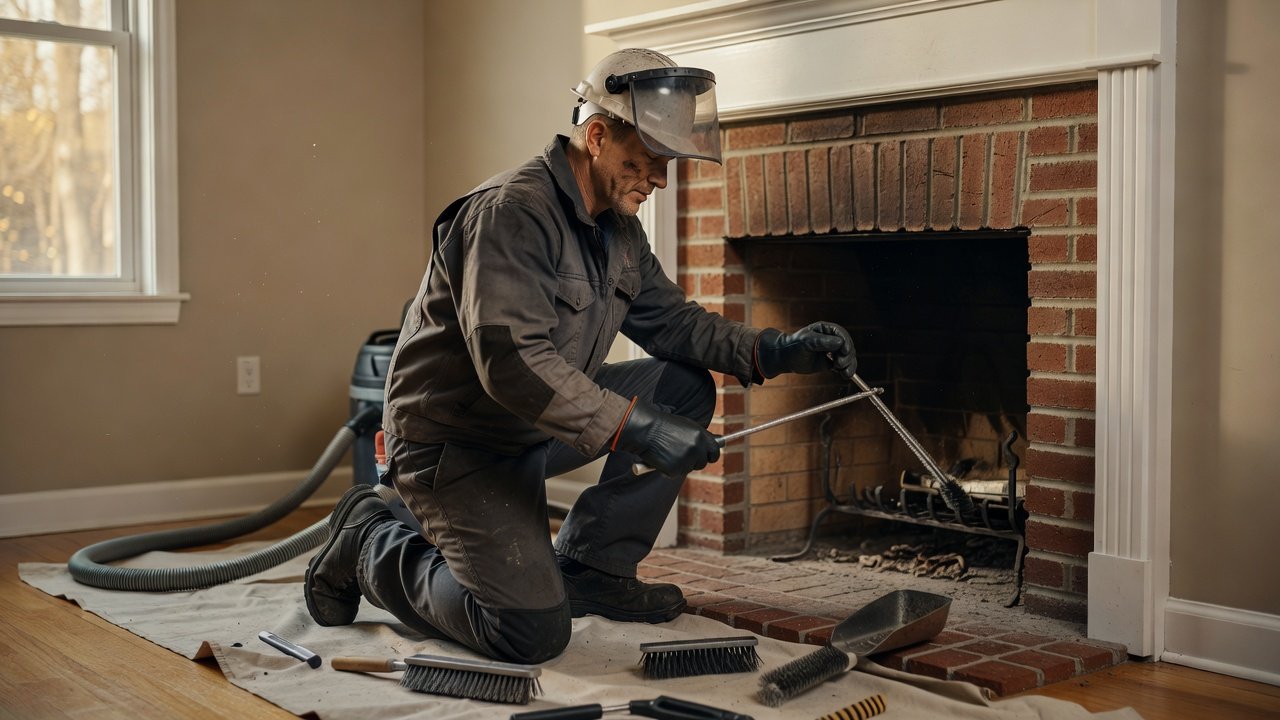
When cleaning is necessary, the technician selects appropriate brushes or other equipment for the chimney and the type of deposits present. Drop cloths and suitable vacuum or containment equipment may be used to control soot and debris.
Not every chimney needs the same cleaning method. Hardened or glazed creosote can require specialized professional treatment rather than ordinary brushing.
Step 4: Review of findings
The technician explains any issues identified and whether additional inspection or repairs are recommended. Ask for a written summary of the work performed and any concerns found.
Some appointments take less than two hours, while others take longer because of access, the chimney’s condition, multiple flues, or additional inspection requirements. A fixed appointment time should not be treated as a guarantee that every chimney can be inspected and cleaned within that window.
What Is Creosote, and Why Is It Dangerous?
Creosote forms when combustion byproducts condense on the interior surfaces of a chimney. It may appear flaky, crusty, sticky, tar-like, or shiny and hardened.
Because creosote is combustible, substantial deposits can increase the risk of a chimney fire. The type and condition of the deposit determine which cleaning method is appropriate.
There is no need for homeowners to identify a formal “first-, second-, or third-degree” creosote classification. These labels should not be presented as official CSIA classifications. A qualified technician can assess the deposits and explain whether ordinary sweeping is appropriate or whether specialized removal is needed.
Do not attempt to burn off creosote by building an excessively hot fire. If you suspect a chimney fire, get everyone outside and call 911. Do not use the fireplace again until it has been professionally evaluated.
What Is the Difference Between a Level 1, Level 2, and Level 3 Inspection?
Inspection levels describe the scope of the examination. They are not simply three different cleaning packages.
Level 1 inspection
A Level 1 inspection is generally appropriate when the chimney and connected appliance remain in their current use and there are no known conditions requiring a more detailed examination. The technician examines readily accessible portions of the system for deposits, obstructions, and visible damage.
Level 2 inspection
A Level 2 inspection is appropriate in circumstances such as a property sale or transfer, certain changes to the appliance or fuel, or an event or malfunction that may have damaged the chimney. It includes the Level 1 scope plus a more detailed examination of accessible areas and video scanning of the flue when feasible.
Level 3 inspection
A Level 3 inspection may be needed when a suspected hazard cannot be adequately evaluated without accessing concealed portions of the chimney. It can involve removing components or portions of the surrounding construction to investigate a specific concern.
Most routine annual inspections begin with Level 1 when the system’s use has not changed and there are no known reasons for a more detailed examination. If you are buying a home in New Providence, Summit, Madison, or Chatham, ask whether a Level 2 inspection is appropriate for the transaction and the chimney’s history.
What Should Chimney Cleaning and Inspection Cost?
The cost depends on the service requested, the number of flues, the amount of buildup, accessibility, and whether additional inspection or repairs are needed.
A basic cleaning and inspection is different from a Level 2 inspection with video scanning, specialized creosote removal, or liner repairs. Some providers bundle services, while others price them separately.
Before booking, ask the company to confirm:
-
Whether the quote includes cleaning, inspection, or both.
-
Which inspection level is included.
-
Whether a camera scan is included or priced separately.
-
Whether multiple flues or connected appliances are included.
-
Whether additional cleaning or repairs would require a separate estimate.
-
Whether you will receive a written summary of the findings.
Be cautious about assuming that an unusually low advertised price includes a complete inspection and cleaning. Compare the scope of service rather than the headline price alone. A high price is not automatically evidence of better work, either.
What Warning Signs Should You Look for Before Calling a Sweep?
A few visible or noticeable changes can help you decide when to arrange an inspection.
-
Persistent smoky or tar-like odors: These may come from creosote deposits, moisture, or airflow problems.
-
White staining on exterior masonry: This may indicate moisture movement through the brick or mortar.
-
Visible cracks or crumbling mortar: These can indicate deterioration that deserves evaluation.
-
Debris or pieces of possible flue material in the firebox: Stop using the fireplace until the source has been identified.
-
Smoke entering the room: Stop using the fireplace until the cause has been assessed.
-
A missing or damaged chimney cap: Have the cap and surrounding components checked for possible water intrusion or blockage.
These signs do not all indicate the same problem. A professional inspection helps determine whether cleaning, maintenance, or repairs are necessary.
How to Verify a Sweep’s CSIA Certification
Before hiring a chimney sweep, use the CSIA’s official website to check its certification information and locate certified professionals.
Ask the company for the individual technician’s name and certification details, then verify that the credential is active. You can also ask whether the company carries appropriate liability insurance and whether it provides written inspection findings.
Certification is an important qualification to consider, but it should be combined with clear communication, an appropriate inspection scope, and a written estimate for any additional work.
Where to Start in New Providence and Nearby Towns
Homeowners in New Providence can begin by contacting a chimney service that confirms it serves the area and can explain its inspection and cleaning process.
Chatham Chimney Services, which operates the website chimneyinchatham.com, lists New Providence, Summit, and Madison among its service areas. Its website describes its technicians as CSIA-certified and provides a contact form for estimates. Confirm current availability, the technician’s active certification, the services offered, and any fees directly before booking.
When contacting a provider, describe the type of fireplace, when it was last inspected, and any concerns such as smoke, odors, water stains, or visible damage. This information helps the company determine which service may be appropriate.
What to Know Before You Book
A CSIA-certified chimney sweep has demonstrated relevant knowledge through a recognized certification process, but the actual service still matters. Ask what will be inspected, whether cleaning is needed, and how any findings or repair recommendations will be documented.
For homeowners in New Providence, Summit, Madison, and nearby communities, annual inspection is a practical starting point. Cleaning and repairs should be based on the chimney’s actual condition rather than a one-size-fits-all schedule.
Related from Chimney in Chatham NJ: Chimney Sweep in Chatham, NJ · Chimney Sweep in Chatham
Areas we serve
Chatham, NJ · Chatham, NJ · Chatham, NJ · Chatham, NJ · All areas →