
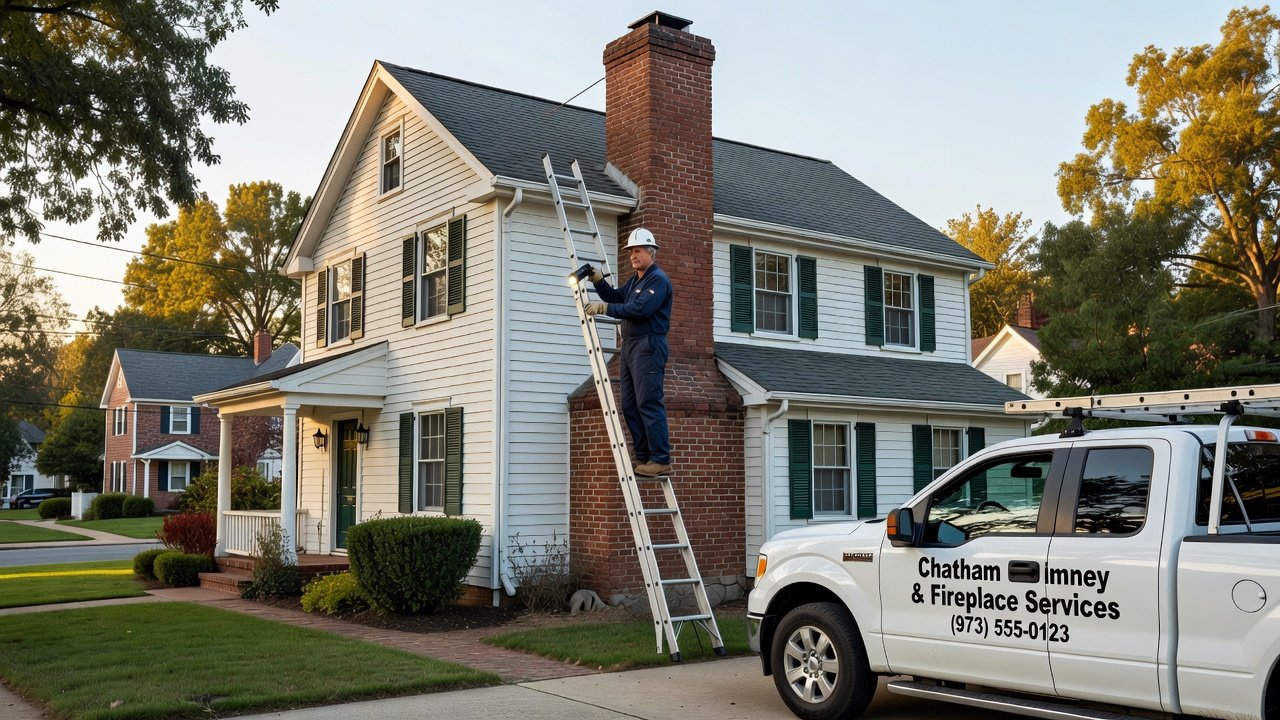
How to Get Your Chimney Inspected in Chatham, NJ: Before It Becomes a House Fire
A chimney can look fine from the outside while hiding creosote buildup, a damaged flue liner, or water intrusion that has been quietly weakening the masonry. These problems are not always visible from the ground, which is why regular chimney inspections matter. NFPA research identifies heating equipment as a leading cause of home fires, with heating equipment responsible for an estimated 13% of U.S. home structure fires from 2016 through 2020. If you own an older home in Chatham, East Hanover, Madison, or another Morris County community, knowing what happens during a chimney inspection can help you identify problems before they become more serious.
Before You Start
You do not need to clean your chimney before a professional inspection. In fact, attempting to clean the flue yourself can make it harder to determine what condition the system was in before the cleaning.
Instead, clear the area around the fireplace and make sure the technician can safely access the appliance and chimney connection.
It also helps to write down anything unusual you noticed during the last heating season. Examples include smoke entering the room, persistent chimney odors, visible cracks in the firebox, difficulty operating the damper, or debris falling into the fireplace.
Share those observations with the technician. They can help determine where additional inspection may be necessary.
When choosing a contractor, look for appropriate training and credentials. CSIA maintains a certification program for chimney professionals and provides homeowner resources on chimney inspection, cleaning, and maintenance.
Step 1: Schedule Your Inspection Before the Heating Season
Late summer and early fall can be practical times to schedule a chimney inspection because homeowners often begin preparing their fireplaces before colder weather arrives.
However, you do not have to wait until the end of summer.
If you are concerned about your chimney in February or another part of the year, schedule the inspection when you notice the problem. Waiting for the next heating season can allow an existing defect to worsen.
If you recently purchased a home, tell the chimney professional about the change in ownership. A Level 2 inspection may be appropriate when conditions have changed or when the chimney’s service history is uncertain. The appropriate inspection level depends on the circumstances of the system and the requirements of NFPA 211.
Step 2: Understand Which Inspection Level You Need
NFPA 211 defines three inspection levels. The correct level depends on the condition and use of the chimney rather than simply the age of the home.
Level 1 Inspection
A Level 1 inspection is generally used when the chimney and connected appliance are being used under the same conditions and there have been no significant changes.
The inspection covers readily accessible portions of the chimney, appliance, and connections. The professional also checks for blockages, deposits, and visible conditions that could affect safe operation.
CSIA identifies Level 1 as the appropriate inspection level for routine annual inspections when nothing significant has changed.
Level 2 Inspection
A Level 2 inspection is more comprehensive.
It includes the areas examined during a Level 1 inspection plus accessible areas such as attics, crawl spaces, and basements when applicable. It also includes an internal examination of the flue using video scanning or another appropriate method.
A Level 2 inspection is used when there are changes in the system or conditions that require a more thorough evaluation. Examples can include changes to the appliance or fuel type, certain property transactions, or situations where a Level 1 inspection cannot adequately determine the chimney’s condition.
Ask the technician why a particular inspection level is recommended for your chimney.
Level 3 Inspection
A Level 3 inspection is the most extensive inspection level.
It is used when a suspected hazard cannot be fully evaluated through a Level 1 or Level 2 inspection. It may require removal of components or limited destructive access to concealed areas.
Level 3 inspections are not routine. They are performed only when the available evidence indicates that additional access is necessary.
Step 3: Participate in the Inspection
You do not need to follow the technician around every minute, but it is reasonable to ask questions and understand what is being examined.
Ask about:
-
The condition of the firebox
-
The damper
-
The smoke chamber
-
The accessible flue
-
Creosote or other deposits
-
The chimney crown and masonry
-
The chimney cap
-
Flashing and areas where water may enter
-
Any visible damage to the liner
If a Level 2 inspection includes video scanning, ask whether you can review the footage or photographs documenting the findings.
CSIA identifies cracked or collapsed flue tiles, large missing pieces of flue tile, exterior masonry cracks, damaged rain caps, and evidence of smoke escaping through masonry or tile liners as conditions that warrant professional attention.
A professional should be able to explain what was found and why it matters without relying solely on technical terminology.
Step 4: Review the Written Report
Your inspection should leave you with more than a verbal recommendation.
Ask for written documentation describing the areas inspected, significant findings, and recommended next steps.
If the technician recommends a major repair, ask for documentation supporting the recommendation.
For example, if a contractor recommends replacing a flue liner, ask:
-
What damage was found?
-
Where is the damage located?
-
Was the liner visually inspected?
-
Was video scanning performed?
-
Is the entire liner affected?
-
Can the damaged area be repaired, or is replacement necessary?
-
What happens if the repair is postponed?
You should not feel pressured to approve expensive work without understanding what problem the work is intended to solve.
Step 5: Get Repair Estimates Before You Decide
Not every inspection finding requires an immediate major repair.
Some conditions may require prompt attention because they affect the safe operation of the chimney. Others may be maintenance issues that can be addressed as part of a planned repair.
The important thing is to understand the difference.
If a contractor recommends extensive work, consider getting a second written estimate. Compare the scope of work rather than simply choosing the lowest price.
A lower estimate is not necessarily better if it leaves out important parts of the repair.
Likewise, a higher estimate is not automatically justified simply because the contractor uses terms such as “safety issue” or “code violation.”
Ask for the specific condition that was found and the reason the recommended repair is necessary.
Step 6: Clean the Chimney When the Inspection Shows It Is Necessary
Inspection and sweeping are related, but they are not the same service.
An inspection evaluates the condition of the chimney and venting system. Cleaning removes deposits and debris when they have accumulated to a level that requires removal.
CSIA follows NFPA 211 guidance recommending annual chimney inspections. CSIA also recommends sweeping masonry fireplaces when there is approximately 1/8 inch of sooty buildup, or sooner if glaze is present.
A professional should determine the appropriate cleaning method based on the type and condition of the deposits.
Heavy or hardened creosote may require specialized cleaning techniques. Chemical products can sometimes be used by professionals as part of a cleaning process, but CSIA does not consider chemical products alone an adequate substitute for mechanical cleaning and inspection.
Troubleshooting Tip: Smoke Coming Into the Room Does Not Always Mean the Chimney Is Dirty
If smoke enters your living room when you light a fire, do not automatically assume the chimney simply needs sweeping.
Draft problems can have several causes. The flue may be cold, the chimney may have an obstruction, the home may have pressure issues, or the fireplace and flue may not be properly matched.
CSIA notes that chimney odors can also be associated with pressure problems that draw air down the chimney and into the home.
If smoke repeatedly enters the room, stop using the fireplace until the cause has been evaluated.
A qualified chimney professional can determine whether the problem involves the damper, blockage, draft, chimney design, or another part of the system.
What About Chimney Inspection Costs?
Inspection prices vary based on the inspection level, number of flues, chimney height, accessibility, location, and whether additional services are required.
For that reason, a fixed price range should not be presented as a universal Morris County rate.
When comparing estimates, ask what is included.
A quote for a Level 1 inspection is not directly comparable to a quote for a Level 2 inspection with video scanning. Likewise, an inspection price may not include sweeping, repairs, or additional diagnostic work.
Get the scope of the service in writing before work begins.
Schedule Your Chimney Inspection Before the Problem Gets Bigger
Chimney problems are often easier to address when they are identified early.
If your chimney in Chatham, East Hanover, Madison, or another Morris County community has not been inspected within the recommended interval, or if you have noticed smoke, odors, damaged masonry, loose debris, or other changes, schedule a professional evaluation.
CSIA recommends annual chimney inspections and advises that chimneys be cleaned, maintained, or repaired when necessary.
Contact Chimney in Chatham at chimneyinchatham.com to schedule an initial inspection.
Our CSIA-certified technicians serve Chatham and surrounding Morris County communities. We will provide a written assessment of the chimney’s condition and explain what needs attention, what can be monitored, and what should be addressed before you use the fireplace again.
Related from Chimney in Chatham NJ: Chimney Sweep in Chatham, NJ · Chimney Sweep in Chatham NJ · Chimney Cleaning in Chatham, NJ
Our services
Chimney Rebuilding · Chimney Repair · Chimney Inspection · Chimney Cleaning · Chimney Sweep Madison · Chimney Sweep in Chatham, NJ
Areas we serve
Chatham, NJ · Chatham, NJ · Chatham, NJ · Chatham, NJ · All areas →