
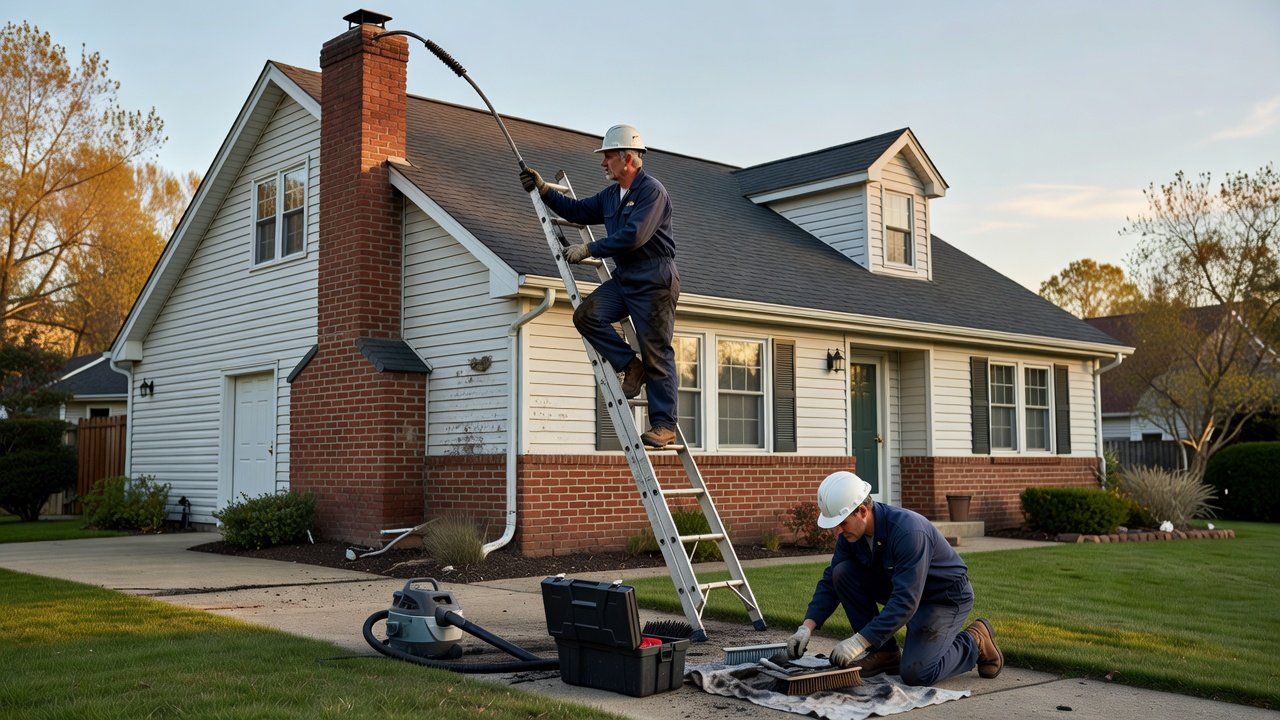
Chimney Cleaning in Chatham, NJ: When to Schedule It and What You Can Actually Do Yourself
Chatham homeowners do not have to wait until the first cold night to think about chimney maintenance. A fireplace or wood-burning stove that has been sitting unused for months can still have creosote deposits, animal debris, or other conditions that affect safe operation.
Understanding when to schedule chimney cleaning in Chatham, NJ can help you avoid the fall rush. It also gives you time to address repairs if an inspection finds a problem. Just as important, knowing what you can safely handle yourself can help you avoid unnecessary work while recognizing when professional service is needed.
Why Chimney Cleaning Timing Matters
The Chimney Safety Institute of America (CSIA), following NFPA 211 guidance, recommends that chimneys, fireplaces, and vents be inspected at least once a year. Cleaning, maintenance, and repairs should be performed when necessary. The need for cleaning depends on factors such as how often the fireplace is used, the type of fuel burned, the installation, and burning habits.
For masonry fireplaces, CSIA recommends sweeping when soot buildup reaches about 1/8 inch or sooner if glaze or creosote is present. Hard or glazed deposits may require more specialized cleaning methods than ordinary soot.
That means there is no universal rule that every Chatham chimney must be cleaned during a particular month. The most useful time to schedule service is generally before you plan to use the fireplace regularly, provided the chimney has not developed a condition that requires attention sooner.
When Should Chatham Homeowners Schedule Chimney Cleaning?
Spring
Spring can be a practical time to schedule chimney maintenance because the main heating season has ended. You may also have more time to arrange repairs if an inspection finds damaged masonry, flashing, a crown, or another component.
However, spring is also when chimney swifts return to the United States. Chimney swifts are protected migratory birds that commonly use open masonry chimneys for nesting and roosting. The U.S. Fish and Wildlife Service says swifts generally arrive in March or April and depart in August or September, although timing varies by location.
If birds are using your chimney, do not simply remove a nest or disturb active birds. A professional familiar with chimney-swift protection can help determine the appropriate approach.
Summer
Summer can also be a good time to arrange an inspection or cleaning before regular fireplace use resumes.
If you notice water damage, deteriorating masonry, a damaged chimney cap, or other problems during the summer, addressing them before the heating season gives you more time to investigate the cause and arrange repairs.
There is no reliable reason to assume that summer humidity alone means a chimney requires cleaning. Moisture problems are more appropriately evaluated based on visible deterioration, water entry, deposits, and the condition of the chimney system.
Fall
Fall is when many homeowners begin thinking about their fireplaces again. That makes it an important time to schedule service, but waiting until late fall can make scheduling less convenient.
If your chimney has not been inspected within the recommended interval, arranging an inspection before regular use begins can help identify deposits, blockages, or visible defects.
Do not assume that a chimney is safe simply because it was cleaned last year. Annual inspection is intended to identify changes that may have occurred since the previous service.
Winter
Chimney cleaning can still be performed during winter. The more important consideration is what happens if the inspection discovers a repair that needs attention.
Some masonry and exterior repair work may have weather and material requirements that affect when it can be performed. The appropriate procedure depends on the repair, materials, manufacturer’s requirements, and applicable construction requirements.
For that reason, homeowners who know they will be using their fireplace throughout winter may benefit from arranging inspection and cleaning before the season begins.
What Can You Safely Do Yourself?
There are several basic maintenance tasks homeowners can handle without attempting to perform a professional chimney inspection.
Clean the Firebox
You can remove cooled ashes from the firebox as needed. Ashes should be treated as potentially hot until they are completely cool. When disposing of them, use a metal container with a tight-fitting lid and keep it away from combustible materials.
Do not assume that removing ashes from the firebox cleans the chimney. Ash removal and chimney sweeping are different tasks.
Check the Damper
Before using the fireplace, you can check whether the damper opens and closes properly.
If the damper is stuck, difficult to operate, or appears damaged, do not force it. A chimney professional can determine whether the damper needs cleaning, adjustment, or repair.
Look for Obvious Problems
From a safe location, homeowners can look for visible signs of trouble around the fireplace and chimney.
These may include:
- Damaged or missing chimney cap components
- Water stains around the fireplace
- Deteriorating masonry
- Loose bricks or mortar
- Rust on certain metal components
- Unusual odors
- Debris falling into the fireplace
- Visible animal activity
These observations do not replace an inspection. They simply give you useful information to report to a professional.
What Should You Leave to a Professional?
A professional chimney inspection involves more than looking up the flue with a flashlight.
CSIA guidance identifies Level 1 as the inspection level generally used for routine chimney cleanings and annual inspections when nothing significant about the system or its use has changed. It covers readily accessible portions of the appliance, chimney, and connections.
A Level 2 inspection is more extensive. CSIA recommends it when conditions of use are changing, when a Level 1 inspection cannot determine whether the system is serviceable, or in situations such as a property sale, planned relining, a building or chimney fire, certain weather or seismic events, or an operating malfunction that could have caused damage. A Level 2 inspection includes accessible areas such as attics, basements, and crawl spaces and requires video scanning or a similar examination of the chimney interior.
So a camera is not automatically required for every routine chimney cleaning. It is an important part of a Level 2 inspection when that inspection level is appropriate.
Do Not Try to Remove Hard or Glazed Creosote Yourself
Creosote can appear as flaky, crusty, sticky, tar-like, or hardened material. Some deposits are significantly more difficult to remove than ordinary soot.
CSIA notes that standard brushing works for soot and ordinary creosote deposits, while mechanical cleaning methods may be used for hard or glazed deposits. These methods require appropriate equipment and training.
Chemical products also should not be treated as a substitute for mechanical sweeping. CSIA explains that some chemical cleaners may be used by professionals to help change the condition of hard deposits, but the resulting material still needs to be removed from the chimney system.
Why a Visual Look From the Fireplace Is Not Enough
A homeowner looking up from the firebox may be able to see part of the flue, but that does not provide a complete assessment of the chimney.
Some portions may be inaccessible. Offsets can limit visibility. Damage may occur in areas that cannot be seen from the fireplace opening.
A professional inspection can evaluate accessible portions of the chimney and determine whether additional inspection methods are appropriate.
This is particularly important after a suspected chimney fire. CSIA advises homeowners not to continue using a chimney after a suspected fire until it has been swept and evaluated by a qualified professional because damage such as joint failure, metal fatigue, or structural cracking may not be visible from above or below.
What About Older Chatham Homes?
The age of a house alone does not determine whether a chimney needs a Level 2 inspection or whether its liner needs replacement.
Older masonry chimneys can contain clay tile liners or other components that have experienced years of use. However, the appropriate inspection level should be based on the condition and circumstances of the particular chimney rather than simply the home’s construction date.
If you are buying or selling a home, changing an appliance, changing fuel types, planning to reline the chimney, or dealing with suspected damage, ask whether a Level 2 inspection is appropriate.
What Does Chimney Cleaning Cost in Chatham, NJ?
There is no single reliable price for chimney cleaning in Chatham.
The final cost can depend on the type of fireplace or appliance, chimney configuration, amount and type of deposits, accessibility, inspection level, and whether additional work is necessary.
A routine cleaning should not automatically be priced the same as a chimney that requires heavy creosote removal, additional inspection, or repair.
If a company recommends additional work, ask for a written explanation of what was found. Photos or inspection documentation can also help you understand why the recommendation was made.
The Best Time to Schedule Chimney Cleaning in Chatham
For many homeowners, spring and summer are convenient times to arrange chimney cleaning and inspection before the next heating season. But the most important factor is not a specific calendar month. It is making sure the chimney is inspected at the recommended interval and cleaned when deposits or other conditions make cleaning necessary.
If you have not had your chimney inspected recently, do not wait until the first cold night to find out whether it is ready for use.
A qualified chimney professional can inspect the system, determine whether cleaning is needed, identify visible problems, and explain whether additional inspection or repair is appropriate.
Related from Chimney in Chatham NJ: Chimney Sweep in Chatham, NJ — Local Cleaning, Inspection & Safety · Chimney Sweep in Chatham, NJ — Local Cleaning, Inspection & Safety
Our services
Chimney Services in Long Hill Township, NJ · Chimney Services in Parsippany, NJ · Chimney Services in Hanover, NJ · Chimney Services in Chester Township, NJ · Chimney Services in Mountain Lakes, NJ · Chimney Services in Randolph, NJ
Areas we serve
Chatham, NJ · Chatham, NJ · Chatham, NJ · Chatham, NJ · All areas →