
What’s Actually Wrong with Your Fireplace and How a Pro Figures It Out
Most homeowners in Chatham call us after something goes wrong: smoke backing up into the living room, a smell that won’t go away, or a noise they can’t place. A few call because they haven’t had service in years and know they should. Either way, the first conversation usually sounds the same: “Can you just clean it and tell me if it’s okay?”
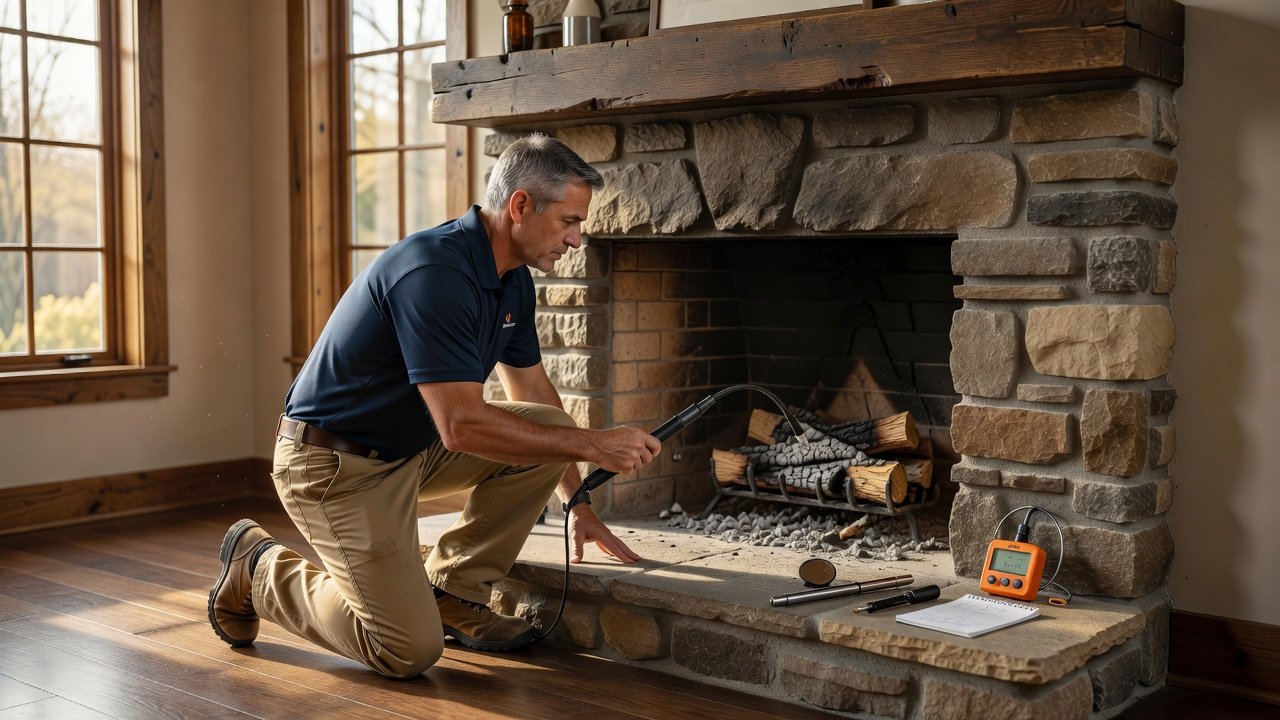
That’s a reasonable ask. But fireplace cleaning in Chatham, NJ, and across Madison, Summit, and the rest of Morris County is rarely a one-size-fits-all service. What looks like a cleaning job often turns out to be a repair. What feels like a draft problem might actually be a liner issue. The work is diagnostic before it’s anything else, and this post explains what that looks like from the moment a technician walks through your door to the moment they hand you a written report.
Problem 1: Smoke Comes Back Into the Room
What you notice: A puff of smoke when you open the damper or a steady drift of smoke into the living room during a fire.
What’s actually happening: There are several possible causes, and a technician has to rule them out in a specific sequence. One common cause in older Chatham colonials is a damper that no longer seals or opens fully. The throat can narrow from years of rust or creosote buildup, restricting airflow.
Negative air pressure is another possibility, particularly in tightly insulated homes. A technician will check the damper manually and evaluate airflow around the firebox before lighting anything.
The fix: A seized or corroded damper may need to be repaired or replaced. If the problem is primarily pressure-related, an outside air supply or another draft solution may be appropriate.
Prevention: Annual inspections can catch damper corrosion and other developing problems before they become more expensive.
Problem 2: A Persistent Smell, Even Without a Fire
What you notice: A musty, ashy, or acrid odor in the room, especially during summer or after rain.
What’s actually happening: Creosote can absorb moisture and produce stronger odors when humidity levels rise. This can occur in older brick chimneys throughout Chatham and Madison.
A Level 1 inspection includes a visual examination of the firebox, smoke chamber, and accessible portions of the flue. If the smell is present but creosote buildup appears minimal, the technician may also inspect the crown and chimney cap. A cracked crown can allow water into the chimney, and wet creosote can produce a stronger odor than dry deposits.
A camera inspection may be recommended when the condition of the liner or the source of moisture is unclear.
The fix: Cleaning can remove creosote buildup that contributes to the odor. Crown sealing or cap replacement can help prevent additional moisture from entering. In some cases, liner repair may be necessary.
Prevention: Regular inspection and cleaning can help control creosote buildup and identify moisture problems before they become more serious.
Problem 3: Visible Cracks in the Firebox Brick or Mortar
What you notice: Crumbling joints, spalling brick faces, or a visible crack running through the back wall of the firebox.
What’s actually happening: Fireboxes are exposed to repeated high temperatures and thermal cycling. Over time, refractory mortar and other firebox materials can deteriorate.
A technician can distinguish between surface deterioration and more significant cracking by examining the joints and determining whether the damage extends into the smoke chamber. A crack limited to the firebox lining is still a concern, but a crack that extends into the smoke chamber may allow combustion gases to reach surrounding areas.
The fix: Minor refractory joint deterioration may be addressed with repointing using heat-rated material. Damaged firebox panels or bricks may require replacement. If the smoke chamber is affected, a refractory parge coat may be needed to restore its interior surface.
Prevention: Annual inspections give a technician an opportunity to identify developing firebox damage before it becomes more extensive.
Problem 4: Level 2 or 3 Creosote Buildup
What you notice: You may notice nothing, or you may experience a strong odor, reduced draft, or, in severe cases, a chimney fire.
What’s actually happening: Creosote can develop in different forms as it accumulates. Stage 1 is a light, dusty deposit that is generally easier to remove. Stage 2 is a heavier, tar-like buildup that may require more aggressive cleaning methods. Stage 3 is glazed creosote, which is dense and significantly more difficult to remove with standard equipment.
A technician should identify the condition of the buildup before determining the appropriate cleaning method. This is an important distinction to ask about when comparing estimates.
The fix: Stage 1 deposits can generally be removed through standard sweeping. Heavier deposits may require rotary cleaning or chemical treatment. Severe glazed creosote may require multiple treatments or additional evaluation if the liner has been damaged.
Prevention: Burning properly seasoned hardwood and maintaining good burning practices can help reduce creosote formation. Regular inspections and cleaning also help prevent buildup from becoming excessive.
Problem 5: A Deteriorating Flue Liner
What you notice: In most cases, the technician finds the problem before you do.
What’s actually happening: Clay tile liners can crack because of thermal cycling, age, and structural movement. Many older New Jersey homes have clay liners that are several decades old.
A camera inspection provides a much closer look at the liner’s condition. The technician can document cracks, gaps, deterioration, or other issues throughout the accessible flue. A crack does not automatically mean an emergency, but it can affect the chimney’s ability to safely contain combustion gases. The condition of the liner determines what repair, if any, is appropriate.
The fix: Depending on the condition and configuration of the chimney, repair options may include a stainless steel liner or another approved relining system. For a typical Morris County home, stainless steel liner installation can run approximately $2,500 to $4,500 depending on flue height and configuration.
Prevention: Liner deterioration is largely related to age and use. Consistent inspections can help identify problems before they become more extensive.
What to Expect When You Schedule Service in Chatham
A standard cleaning and Level 1 inspection runs approximately $150 to $250 for a wood-burning fireplace in this area. That generally covers the sweep, a visual examination, and a written summary of the findings.
If the technician finds a problem, you should receive documentation before any repair work is quoted. Level 2 inspections, which use video scanning, generally cost more and provide a more detailed view of the flue interior.
The appointment can take anywhere from 45 minutes to two hours depending on the condition and accessibility of the system. A drop cloth is placed around the work area, the damper is opened and tested, the firebox and smoke chamber are cleaned, and the flue is brushed from above or below depending on the system.
There may be some dust, but a properly equipped crew should use containment equipment and a high-quality vacuum to keep the cleanup manageable.
Ready to know what you’re working with before this heating season? We serve Chatham, Madison, Summit, and surrounding Morris County towns. Call us or use the form below to schedule a free inspection with no obligation or pressure. We’ll give you a clear picture of what your fireplace actually needs.
Related from Chimney in Chatham NJ: Chimney Sweep in Chatham NJ · Chimney Repair in Chatham, NJ
Areas we serve
Chatham, NJ · Chatham, NJ · Chatham, NJ · Chatham, NJ · All areas →